Saturday, December 27, 2008

CEI Supp 7/1/09 9am KA207

BFE Y3S2 students taking the Supp paper are reminded that this unit is only offered once a year. Therefore, if you fail the Supp paper, you can only retake or resit this unit in Oct 2009 and you will not be able to graduate as scheduled.


Good luck.


Eugene 27 Dec 2008, Pandan Terrace.

Tuesday, November 18, 2008

Valuation of Pulau Mabul?

Subject of controversy: Part of the existing chalets on Pulau Mabul.

A controversial oceanarium resort at Pulau Mabul along Sabah’s east coast still has to get the approval of various authorities here although the state cabinet has endorsed the land office’s green light for project. The Star, 18 Nov. 2008.

A valuation on the non-market values of Pulau Mabul will shed some light on the green cost benefit analysis. TCM, CVM and CM can be the valuation technique.

by Eugene Pek, 18 Nov 2008, Pandan Terrace

Friday, November 7, 2008

Environmental Facts from EcoSave (II)

posted by Eugene Pek, 7 November 2008, Pandan Terrace

(1) Energy saved from one recycled aluminium can will operate a TV set for 3 hours = 0.5 can of gasoline.


(2) Glass produced from recycled glass instead of raw material reduces related air pollution by 20% and water pollution by 50%.


(3) Everyday 50-100 species of plants/animals extinct due to human influences.


(4) In Peninsular Malaysia, more tree species are found in 125 acres of tropical forest than in the entire North America.


(5) About 65kilo sq mile of rainforest is destroyed each year around the world.

Tuesday, November 4, 2008

Environmental Facts from EcoSave

posted by Eugene Pek, 4 November 2008, Pandan Terrace

1. About 30% of Malaysian coastline is subject to varying degrees of erosion.        

P1020401

2. In 2000, Malaysia was ranked fourth in the world in terms of per capita greenhouse gas emission after taking into account land use change with 37.2 tonnes of CO2 equivalent per capita.

images

3. Every tonne of recycled office paper saves 380 gallons of oil.

image 

4. Energy saved from one recycled aluminium can will be able to operate a TV set for 3 hours and is equivalent to half can of gasoline.

image

You can do your part for the environment!


by Eugene Pek, 4 November 2008, Pandan Terrace

You may want to visit the site and join an effort to save the environment.

http://www.cimbislamic.com/ecosave/

Friday, October 31, 2008

Assignment (Sem 200810)

by Eugene Pek, 31 October 2008, UTAR Sg Long

Please confine your assignment within 5 pages of A4 paper. Use Times New Roman 12 and single spacing.

Thursday, October 30, 2008

Credit crisis & climate change efforts

posted by Eugene Pek, 30 October 2008, Pandan Terrace

Visit the link below for more on Financial crisis has lessons for climate fight: expert

http://www.reuters.com/article/environmentNews/idUSTRE49T1BU20081030?feedType=RSS&feedName=environmentNews

What is carbon finance?

posted by Eugene Pek, 30 October 2008, Pandan Terrace. Eugene acknowledges the credit of the author(s), whose name(s) are not mentioned in the source, of this Q & A article (sourced online on 20 October 2008).

image

Source: Gaël Grégoire, Carbon Finance Instrument to Improve Coastal Zone, Solid Waste Management, MEDITERRANEAN WORKSHOP ON INTEGRATED COASTAL ZONE MANAGEMENT (ICZM) POLICY, Alghero, Sardinia (Italy), May 19-21, 2008. World Bank/METAP

What is carbon finance? Carbon finance is the general term applied to resources provided to a project to purchase greenhouse gas (GHG) emission reductions (“carbon” for short). Commitments of carbon finance for the purchase of carbon have grown rapidly since the first carbon purchases began less than eight years ago. As of May 2004, the global market for GHG emission reductions through project-based transactions has been estimated at a cumulative 320 million tons of carbon dioxide equivalent since its inception in 1996. Asia now represents half of the supply of project-based emission reductions, with Latin America second with 27 percent. Volumes are expected to continue to grow as countries that have already ratified the Kyoto Protocol work to meet their commitments, and as national and regional markets for emission reductions are put into place, notably in Canada, Japan and the European Union (the European Union has already put in place its Emissions Trading Scheme as of January 2005).

Why do greenhouse gas emission reductions have value? Meeting the Kyoto targets will require public and private investments. Many industrialized governments that have ratified the Protocol have already begun implementing domestic policies and regulations that will require emitters to reduce greenhouse gas emissions, according to the established targets. So far, experience has shown that the cost of reducing one ton of carbon dioxide (a greenhouse gas) can cost from $15 up to $100 in industrialized countries. By contrast, there are many opportunities to reduce greenhouse gases in developing countries at a cost of $1 to $4 per ton of carbon dioxide. Hence, an emission reduction that was achieved at a lower cost has value to a public or private entity in an industrialized country that is required by regulation to reduce its emissions.

What is the World Bank’s involvement in Carbon Finance? The threat climate change poses to long-term development and the ability of the poor to move out from poverty is of particular concern to the World Bank. The carbon finance activities of the World Bank are a natural extension of the Bank’s mission to reduce poverty. The Bank makes every effort to ensure that poor countries can benefit from international responses to climate change including the emerging carbon market for GHG emission reductions. The private market for emission reductions, still in an early stage, does not yet have significant volume, and the potential benefits have not reached developing countries. These countries, particularly the poorest among them, are bypassed by the carbon market and the potential development benefits it would bring. The World Bank’s carbon finance products help grow the market by extending the frontiers of carbon finance to new sectors or countries that have yet to benefit, and to reduce market entry risks for other buyers.What specific role is the Bank playing in the development of a market for carbon trade? The role of the Bank through its Carbon Finance Unit has been one of market facilitator and catalyst. The Bank has made significant efforts in the development of the carbon market, first by launching the Prototype Carbon Fund (PCF) to demonstrate how to cost-effectively achieve GHG reductions while contributing to sustainable development. More recently, the Bank launched a series of carbon funds to expand learning-by-doing to other countries and economic sectors, and to address market failures, such as through the Community Development Carbon Fund (CDCF) and Bio Carbon Fund (BioCF), which are designed to enable smaller and rural poor communities to benefit from carbon finance. The Bank has developed a balanced approach between stimulating demand as a buyer in the early stages of the market and its support to sellers to tap new and additional sources of funds from carbon trade to support their sustainable development and to alleviate poverty. This will consist of meeting the demand for capacity building and technical assistance through Carbon Finance (CF) -Assist, and designing instruments in consultation with developing countries to enable them to directly access the market.

Who are the beneficiaries of the Bank’s actions in carbon finance? The main beneficiaries of the Bank’s actions in the carbon market: a) The global community. The Bank’s efforts to catalyze a market for greenhouse gas mitigation and sustainable development hopefully contributes to the success of the market mechanisms, which are essential to lowering the cost of global action on climate change. b) The Public and Private sectors that wish to participate in the market. Through the establishment of Carbon Funds, and by pooling early participants in the market, the World Bank has reduced the market entry risk for other market players. The Bank’s procedures to create carbon assets are in the public domain. c) The least developed countries and poor areas of all developing countries. The Bank is involved in market areas that the private sector simply won’t go because they perceive the risk as being too high. By doing this , the World Bank is helping to bring the benefits of carbon finance to those parts of the world that would be by-passed by the market. The Bank provides technical assistance in order to develop the set of procedures and institutional arrangements that can make the market more sustainable. For example in one developing country, it took 18 months to get the first approval for a carbon finance project. Now there are almost a dozen projects in that country.

The Bank has created several carbon funds. How do they work? Who owns these funds? The World Bank manages several funds and facilities comprised of public and private participants. These funds are public or public-private partnerships managed by the World Bank as a Trustee. They operate much like a closed-end mutual fund; they purchase greenhouse gas emission reductions from projects in the developing world or in countries with economies in transition, and pay on delivery of those emission reductions. The emission reductions can be used against obligations under the Kyoto Protocol or for other regulated or voluntary greenhouse gas emission reduction regimes. All the emission reduction credits are purchased on behalf of the public and private sector Participants in the funds. The World Bank is acting as an honest broker to ensure that the benefits of carbon finance make their way also to the developing world and to countries with economies in transition. The World Bank regularly consults with a wide range of stakeholders, including the PCF’s Host Country Committee, about the design and operation of these carbon funds.

Why do investors and governments find the World Bank Carbon Funds an attractive business proposition? Companies and governments are attracted to the various Carbon funds of the World Bank by the proven record of the World Bank in providing shareholders with Kyoto-compliant certified emission reduction assets at a guaranteed low price. Additional benefits for investors include the acquisition of high-value knowledge and intelligence on carbon finance and emerging national, regional and international markets.

Who are the main players in the carbon market at this point in time? Companies and governments are attracted to the various Carbon funds of the World Bank by the proven record of the World Bank in providing shareholders with Kyoto-compliant certified emission reduction assets at a guaranteed low price. Additional benefits for investors include the acquisition of high-value knowledge and intelligence on carbon finance and emerging national, regional and international markets.

Natural environment that we still possess

by Eugene Pek, 30 October 2008, Pandan Terrace

The work of Mother Nature is beyond comprehension. The use and non-use values of these nature's masterpieces make up the total economic value.

Self-taken photographs, Oct 2008

P1020353 

P1020481

P1020428

P1020405

IMG_2320  IMG_2366 

IMG_2168  IMG_2219

Good blend of nature & development

by Eugene Pek, 29 October 2008, Pandan Terrace

Balanced development and a good blend between economic motives and environmental preservation.

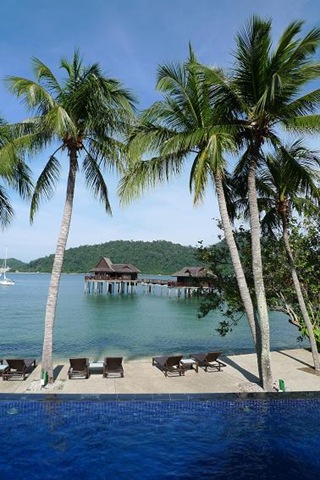
Some self-taken photographs at Pangkor Laut Resort.


IMG_2176  P1020306

P1020266  P1020457

Wednesday, October 29, 2008

Will you allow beautiful beaches to erode by rising sea level?

by Eugene Pek, 29 October 2008, UTAR Sg Long

The recent Sydney climate change impact report cautioned that rising sea levels will erode the iconic beaches of Sydney by 2050. By that year, the sea level will rise 40cm above the level of 1990.

Higher global temperature melts the iceland in the Antartica and this would add to the volume of sea water contributing to rising sea level.

Imagine a similar scenario that of Sydney happening to Malaysia. What are some of the possible impacts?  
(1) Many scenic beaches will be eroded and (2) there will be higher flood risks in coastal rivers.

Cannot imagine if these beautiful beaches are eroded one day... (see pix. Emerald Bay, Pangkor Laut Island, Oct 2008)

Forests' worth

by Eugene Pek, 28 October 2008, UTAR Sg Long

Malaysia houses one of the world's oldest tropical rainforests. And within these forests, many herbs and medicinal plants can be found, namely the wild ginger, pepper, wild berries are some of them.

Trekking through the Jim Thompson Trail at Cameron Highlands and the Pangkor Laut virgin forest allowed me to observe many types of wild orchids, pepper leaves, special ant ferns (unlike the green ferns we know, ant ferns are hard black blocks). 

These rainforests supply many medicinal plants which are priceless!!!

Pix taken in Pangkor Laut virgin forest, Oct 2008

Mangrove forests: What about them?

by Eugene Pek, 28 October 2008, UTAR Sg Long

When I visited the Bako National Park, Sarawak, way back in 1997, not much has been taught to me about mangrove forests and its value. The first impression seeing the mangroves is that they look muddily-ugly and are sometimes smelly.

However, after a decade my thought and love for mangrove forests takes a 360 degree turn. I start to learn that mangroves do not only provide firewoods that can help generate energy but also a breeding place for many migratory birds and fish species. 

Research has found that mangrove forests can act as tsunami-cushion which can soften the impact of strong tidal waves; A Mother nature's shield.

Mangrove forests are wonderful!!!

Pix taken in Bako National Park, June 1997

Tuesday, October 28, 2008

How much are hornbills worth?

by Eugene Pek, 28 October 2008, UTAR Sg Long

A time will come when the hornbills will extinct from the nature due to excessive development.

Therefore, is the preservation of this bird species a worthwhile effort?

Before one can answer this question, an economic value has to be put onto these birds; i.e. how much are they worth?

Monetising these values would be able to give us their worth.

How then to monetise them?

There are a few valuation techniques that can be employed to monetise the birds.

If one considers only the use-value, i.e. the satisfaction of bird lovers from sighting these birds, then the travel cost method (TCM) can be used.

TCM estimates the value of an environmental service or site using travel and time cost incurred by the public traveling to the recreational site to enjoy the recreational benefits (i.e. bird sighting). The underlying premise of TCM is that if a person is willing to pay (WTP) a cost to visit the site, it will represent the value a person placed on the recreational park.

Pix taken in Pangkor Laut Resort, Oct 2008.


Wednesday, October 22, 2008

New Dimension: Agricultural Multifunctionality (AMF)


by Eugene Pek, 22 October 2008, UTAR Sg Long 

The conventional manner of defining agricultural has evolutionalised from only a single role of food supply to multiple roles to include non-food benefits, better termed as AMF. These extended roles include the functions of economic, social, environment, food security and cultural. They blend well with the concept of sustainable development with calls for not only the environmental concerns but also environmental sustainability, economic sustainability and socio-political sustainability. . The following discussion of the extended roles of agriculture is drawn from the work of Jamal et al. (2006):

1. Economic function

This role relates to the direct economic benefits accrued to farmers from crop planting activities. Jamal found that average farm projects in his sampling site have had slight positive effects on agricultural income and consequently, on total income generation in 2004 and 2005 relative to the previous years.

2. Social function

This function is discussed in three different contexts, i.e.:

2.1  Altruism value (AV)

This is the benefit derived from the traditional sharing of wealth made possible through paddy plantation especially in the muslim community. In the same work, Jamal estimated the AV to be USD10.3 million.

2.2  Employment opportunities

Even though agriculture contributes only 16 percent of the total employment in the country, paddy plantation specifically, does play its role in the provision of employment. On average each hired labourer received payment of some USD 7.90 per day and aggregate returns per annum or the value of employment opportunity benefits is highly substantial at USD 31 million.

2.3 Sheltering function (SF)

This function is critically important in times of economic recession as a taker of excess or unemployed workforce from urban areas. In Malaysia, agriculture has successfully played this role during the 1997 financial crisis. The SF aggregate value during the entire crisis period from 1997–2000 stands at USD 126 million.

3.  Environmental function

Alike the social function, this function is discussed in three different contexts, i.e.:

3.1 Flood mitigation function

Paddy fields are good rain water storage ‘tanks’ during the monsoon seasons, preventing floods in the nearby cities. Jamal asserted that this intangible value is one the most valuable contribution of paddy fields to the ecosystem. The estimated value of the flood mitigation function is approximately USD 0.034 million.

3.2 Heat mitigation function

Literatures show that paddy fields play an important role in heat mitigation. Empirical investigation found that USD 53,350 can be saved from the cost of cooling systems by the reliance of heat mitigation on the ecological function of paddy fields.

3.3 Air pollution reduction function 

Air pollution is one of the environmental problems in the country, much so with the presence of haze sent by the forest fires in the neighboring country, Indonesia during the dry seasons. Haze contains high density of dust particulate matter, PM10. During the hazy days, the PM10 concentration can reach up to 60 μg/m3, 20 percent higher than the standard level. Theoretically, air pollution in an area can be reduced with the presence of paddy fields, as the dust particles can be absorbed by the water retained in the fields. On average the state of Kedah, which is renowned for her paddy fields has lower Air Pollutant Index (API) reading than the more industrialized state of Selangor. Study has found that a total welfare improvement value of USD 2.03 million is accrued to the residents of Alor Setar, the capital city of Kedah state, due to the lower air quality resulted from the ecological functions of paddy fields.

4. Food security

This function of the AMF is to ensure adequate level of rice production in the country at all times for the ever increasing population. Report has found that with a simulation of 20 percent decline in rice production due to the liberalization of free trade, urban Malaysians are willing to pay (WTP) a price premium of 33 percent i.e. around USD 1 per month. As an aggregate the estimated value of this function is USD 9.2 million annually.

5. Cultural function

This cultural function is an addition to Jamal’s selected functions. Like Japan and many other countries, Malaysia values agricultural activities and rural landscape dearly not only for commercial reasons like food exports and tourism but the cultural values they offer that help create strong communal bonds. Agricultural is a way of life to the Japanese as evident in the work of Goda, Kada and Yabe (2006) which talks about these amenities as the pride and ‘brand name’ of their hometowns. Autumn festivals as thanksgiving of good harvest and ‘Obon’ reunion time are still being practiced widely in Japan where family members return to their hometowns in the rural areas to worship their ancestors. In Malaysia, the Gawai Day celebrated in June annually by the Dayaks (natives of Sarawak state) is held for the similar reason of thanksgiving to God for good harvest. Every year crowds of tourists enjoyed themselves in this celebration which is uniquely ‘agricultural-oriented’.

Acknowledging the increasing importance of these agriculture multifunctions, there are efforts in promoting these new dimensions in the country. Activities aim at inculcating more awareness and appreciation of the public are based on the objectives of making more multimedia awareness of AMF and a good example is the television advertisement of Sime Darby (the biggest oil palm producing company in the world), showing the importance of having sustainable palm oil production towards a more balanced growth.

These are important initiatives but may not be sufficient to drive more intervention from the government sector into recognizing AMF as a crucial element in sustainable development. The following sections discusses call for sustainable development (particularly in palm oil production) due to conventional reasons and offer some extended profound thoughts on AMF which may be worth deliberating.

Global Social Equity? Should the rich pays for rainforests?

by Eugene Pek, 22 October 2008, UTAR Sg Long

The issue of sustainable development is a question of efficiency in ecological management. Malaysia as a resource rich nation is always the focal point of discussion when comes to natural resources sustainability. World bodies are exerting pressure on the country to preserve and conserve as many rainforests as possible but they never talk about who should be paying for all these resource maintenance costs. For a developing country like Malaysia to maintain her forest areas bearing in mind that 65 percent of land are covered by rich and dense tropical forests is a mouthful and enduring mission.

There are several world renowned national parks in the country like the National Park, more known as Taman Negara, Bako National Park, Gunung Mulu National Park and others that require huge conservation funds from the state governments. Taman Negara, the world oldest tropical rainforest is mostly located in the relatively poorer state of Pahang, whom pays for the conservation of the park. On one hand the state needs to be efficient in natural resources management but on the other hand the issue of social equity has to be addressed. Who shall pay these costs? It looks like the West and environmental NGOs value these parks more than the locals and as such these parks are open to probable development for commercial reasons in the future when funds are inadequate and growth for the quest of money dominates the passion for environmental services. It will not be surprising that a day will come where Taman Negara is developed by the Pahang state government for economic growth related motives.

At this juncture, the discussion aims to highlight the need for a biodiversity market to create a world trust fund that would aid the high conservation costs of national parks in the country. The fund can channel monetary aids to the state government to ensure ling-term sustainability of those parks which are dearly valued by the world. Chichilnisky, who proposed and wrote the global trading of carbon emissions with preferential treatment for poor countries which became part of the Kyoto Protocol adopted by 166 nations in December 1997, noted in her environmental sustainability conference lecture at Monash University Malaysia in December 2007 that she is working on a similar model for biodiversity market. With this market in place in the near future it will be excellent to see preferential treatment being given to the developing countries like Malaysia to preserve the ecological assets for long term sustainable growth in tandem with agricultural multifunctionality. With the issue of equity probably resolved with the creation of the biodiversity market, efficiency in the world environmental management is made more feasible.

Tuesday, October 14, 2008

Will environmental values change David Ricardo's comparative advantage?

by Eugene Pek, 15 October 2008, UTAR Sg Long

Back to where ‘you’ belong
The idea of planting crops only in their country of origin may be worth pondering. Famous street trees in Pretoria and Johannesburg named the ‘jacarandas’ are under threat as they are either to be felled or prevented from regenerating. Why bother about street trees? It has been claimed by some ecologists that jacarandas are invasive and would harm the biodiversity of the surroundings they inhibit. These trees are not domestically-originated, akin ‘white-immigrant’ from tropical and subtropical regions of South and Central America, Mexico, and the Caribbean, and hence they will draw more ecological resources to grow than the other native tree species. The continuation of planting jacarandas will lead to environmental resource inefficiency which is deteriorating to other local tree genus.

Extended comparative advantage
The ecological inefficiency caused by the jacarandas may shed some lights in broadening our thought in reassessing the concept of comparative advantage by David Ricardo. The principle of comparative advantage rests on the opportunity cost of production rather than the absolute cost. The opportunity cost of production of a good can be measured in terms of the production unit of another good need to be reduced to increase production by one more unit.
The principle of comparative advantage shows that even if a country has no absolute advantage in any product (i.e. cost of productions are higher in all goods as compared to the other country), the country can still specialized and export the product for which she has the lower opportunity cost of production. However, in comparative advantage, only financial costs are considered. The non-financial costs, more known as non-market values, are left out.
With the call for sustainable development and advancement of non-market valuation methodologies, it is timely that the environmental impacts of specializing and producing a good or service be reflected in the total cost of production. The valuation of these non-financial values of ecosystems can be estimated using valuation techniques like the contingent valuation and choice model. The incorporation of these environmental values change the total cost of production and possibly alters the specialization of goods that a country should produce.

Malaysian agriculture: Its sustainability issue

by Eugene Pek, 15 Oct 2008, UTAR Sg Long

Issues towards sustainable development
Currently in the country, the production of palm oil is faced with more sustainable issues than the plantation of other crops. There seems to be some mismatch of perception on the concern of sustainable growth in terms of land management used for oil palm plantation between the Malaysian government and international non-governmental bodies (NGOs). These NGOs and the Western countries are condemning Malaysia on the way forests are cut to make way for palm oil plantation especially in the Sabah state.

The negative claims
Statistics show that the land area in Sabah used for palm oil plantation has increased nearly 2.5 folds in 2004 (1,200,000 hectares) as compared to 1994 (500,000 ha) as quoted in Rahimatsah (2007). The NGOs perceives that the extension is through cutting of virgin forests. Jeffrey Sachs once claimed that Sabah is the most unique place on earth in terms of environmental and ecological endowments and he would like his future generations to have the equal opportunity to enjoy these gifts of nature. Therefore if more and more land is cleared via deforestation for palm oil production, the Sachs juniors may not been able to enjoy the bequest values of the ecosystems of Sabah that are very much appreciated by Sachs senior.
The conventional debates of sustainable development in palm oil production are not directly related or caused by the technological frontier but more of the concerns on the origin of the four million ha (2007) of land used as oil palm estates in the country. The idea of clearing forests for the sake of ‘agri-commercial’ reasons will affect the natural habitats of priceless animals and flora and fauna. The tigers, Sumatran rhinoceros, Asian elephants and orangutans are some of the very unique animals that are affected by land conversions for commercial uses. The Orangutans, especially, are faced with serious habitats problems and high possibility of extinction thanks to the estate expansion to reap high returns of palm oil in the world market.
The other critical concern is the destruction of peatlands, which is crucial ‘carbon sink’ and ‘water retention’ role player. Land clearing for agricultural use will see peatlands tidied commonly through the traditional method of burning which releases huge concentration of carbon dioxide into the air due to the ‘carbon sink’ role of the peatlands. Evidently, during the 1997 Indonesia forest fires which see many peatlands destroyed and responsible for the vast increase of world carbon dioxide levels, an estimated 0.81 to 2.57 Gt of carbon was released and that was equivalent to 13-40 percent of the amount released by fossil fuel burning globally.

The real scenario
Commercial profits aside, the Malaysian government is dismissing all these baseless allegations as the country values highly and is a staunch devotee of sustainable development. The land areas used for palm oil production are from old logging areas or unproductive forests rather than the virgin rainforests as claimed. Tan et al. (2007) asserted that 64 percent of total land mass in Malaysia is rainforests as compared to United Kingdoms (UK) with a mere 12 percent. In addition to that, oil palm plantations only occupied 10 percent of the total mass land in the country. Besides, the government aims to plant 500,000 ha of forest plantation, double the existing ones in the states of Johor, Pahang, Sabah and Sarawak. So, if Malaysia is to be charged guilty in ‘raping’ the virgin rainforest, what about UK?
In the same work of Tan et al., it was reported that from 1990 to 2005, there was only less than one million ha of new land being converted into palm oil estate, but not as massively claimed by the west. In this study, it was also suggested that oil palm plantations are more effective than rainforests in playing the role of ‘carbon sink’ in terms of assimilation of dry matter per ha per year. Several studies indicated that biodiversity of flora and fauna in oil palm estates are not only stably unaffected but has attracted many species of birds, butterflies and mammals, notably even rare species like leopard cats.
A caucus “Roundtable on Sustainable Palm Oil” (RSPO) to promote the growth and use of sustainable palm oil and forging stronger co-operation within the supply chain and other stakeholders was established in 2004. Malaysia as one of the founding members is actively participating in managing RSPO activities and committing herself to the RSPO Principles and Criteria (e.g. transparency of management, commitment to long-term economic and financial viability, responsible in conservation of natural resources and biodiversity and others) to ensure sustainable palm oil production. Sustainability in palm oil is analogous to sustainability in the Malaysian agriculture due to its position as the number one agricultural crop in the country.
Complementing the RSPO is the Best management practice (BMP) that has been implemented and practiced in the country as initiatives towards agricultural sustainability. Operations from harvesting to production of oil palm products have been carried out consistently with the best approaches. Integrated pest management, use of organic fertilizers (from palm oil’s empty fruit brunches), zero open burning and planting of leguminous crops (to minimize soil erosion) are some of the BMP.

Should rich countries pay for rainforests?

By Gerard Wynn
LONDON (Reuters) - Rich countries should pay tropical nations billions of dollars a year to save their forests, using donor money and global carbon markets to foot the bill, said a UK-commissioned report on Tuesday.
In the longer-term, by 2030, developing countries should also start paying to help create "carbon neutral" global forests through binding targets to slow deforestation and plant trees.
Clearing and burning forests for timber and farms creates about a fifth of the greenhouse gases blamed for climate change, but growing urgency to tackle the problem is dividing opinion on how to fight the problem.
Tuesday's report drew criticism from some carbon traders and green groups, saying it down-played costs and skirted real world issues of corruption and land disputes.
The report, "Climate Change: Financing Global Forests," firmly pinned hopes on the notion of carbon trading, where rich countries pay poor ones to cut carbon emissions, so that they can carry on polluting as normal.
"Deforestation will continue as long as cutting down and burning trees is more economic than preserving them," said Johan Eliasch, author of the report and Prime Minister Gordon Brown's special representative on deforestation.
The report estimated that finance from carbon markets could curb deforestation rates by 75 percent by 2030, and urged inclusion of forests in a new global climate pact slated for agreement under U.N.-led talks by the end of next year.
But carbon markets would still leave a funding gap of $11-19 billion by 2020, said the report, to be met by donors currently struggling against a worldwide banking crisis.
Extra pressures now on tropical forests include clearances to plant vegetable oils for biodiesel, and more cattle ranches to satisfy a richer world's increasingly meat-hungry diet.
Carbon markets use a carrot approach, allowing developing countries to earn carbon offsets for chopping fewer trees than in the past, and then selling these offsets to rich countries as a cheaper option to domestic greenhouse gas emissions curbs.
COSTLY
Some critics said that the report's cost estimate of $33 billion a year to halve deforestation by 2030 was too small.
Offsets would have to compensate farmers for not planting valuable crops such as palm oil.
That implied high prices, which made one expert doubt the report's claim that forestry offsets could halve costs for rich nations to fight climate change.
"Over the next decade, forest carbon credits could conceivably cut mitigation costs by 13 percent," said Eric Bettelheim, chairman of a private company Sustainable Forestry Management, citing an estimate by Environmental Defense.
In addition, the report excluded the cost of planting new trees to replace the shortfall in timber supply.
"It's an enormous, industrial-scale undertaking, trees take time to grow and planting trees and maintaining them is expensive," added Bettelheim, estimating the total cost to halve deforestation rates at $50-100 billion.
The Eliasch report skirted the problem of corruption and illegal logging, said Simon Counsell, executive director at the green group the Rainforest Foundation.
The report recommended that rich country donors spend $4 billion over five years for research, to fund local bodies, and resolve local land disputes.
"It really fails to appreciate just how serious and long-term these problems of corruption and governance actually are," said Counsell, adding they would take 10 years to address.
"In DRC (Democratic Republic of Congo) there's fewer than 10 people in the forestry department managing an area of forest twice the size of France. That's the reality on the ground."

What can climate deal do to help credit crisis?


Climate deal seen helping overcome financial crisis

By Gareth Jones
WARSAW (Reuters) - Tackling climate change will help, not hinder, governments' efforts to overcome the global financial crisis, the EU's environment chief said on Tuesday.
The 27-nation European Union has set ambitious goals to curb carbon dioxide emissions by a fifth by 2020, compared to 1990 levels, partly by making power generators and heavy industry pay for permits to pollute in its emissions trading scheme.
Critics say the financial crisis makes it very difficult for industry to make the necessary big investments in clean energy.
"We think this (climate) package is consistent with solving the financial crisis... At the moment, people are focused on the economic crisis, but our package is part of the solution," Environment Commissioner Stavros Dimas told reporters in Warsaw.
"Fighting climate change means investment in energy efficiency, promoting renewable sources and providing incentives to stimulate the economy and contribute to growth."
The EU also argues that moving to a low-carbon economy will create jobs and reduce the bloc's exposure to volatile prices of fossil fuels such as oil and coal which lead to global warming.
Poland and other ex-communist EU member states have expressed concern that carbon dioxide (CO2) curbs will stunt their economic growth by sharply increasing energy prices.
Asked if the Commission was willing to make amendments to its package, Dimas said: "It is not for the Commission to accept amendments, it's for the European Council (of national governments) and for the European Parliament."

"The package is just an instrument to achieve the climate change targets agreed by member states... The Commission can make changes which do not compromise the environmental objectives," he added.
EU ACCORD
Dimas said he was hopeful that France, the EU's current chairman, could forge agreement among member states on the Commission's climate package by the end of this year.
"This package is good for Europe because Europe's economy will become more efficient," he said.
Dimas was in Poland, along with representatives of dozens of other countries, for preparatory talks ahead of a planned U.N. conference in the western Polish city of Poznan in December that is meant to pave the way for a new global climate deal.
The current Kyoto Protocol, which does not set CO2 emission targets for major emerging economies such as China and India, expires in 2012. The United States has also not joined Kyoto.
Referring to this week's talks in Warsaw, Dimas said: "Nobody has said we should cut down our efforts (because of financial crisis). They all said we should continue. We need to send a strong signal from Poznan on fighting climate change."